White shades - Royal Talens

The whites in the Rembrandt oil paint collection

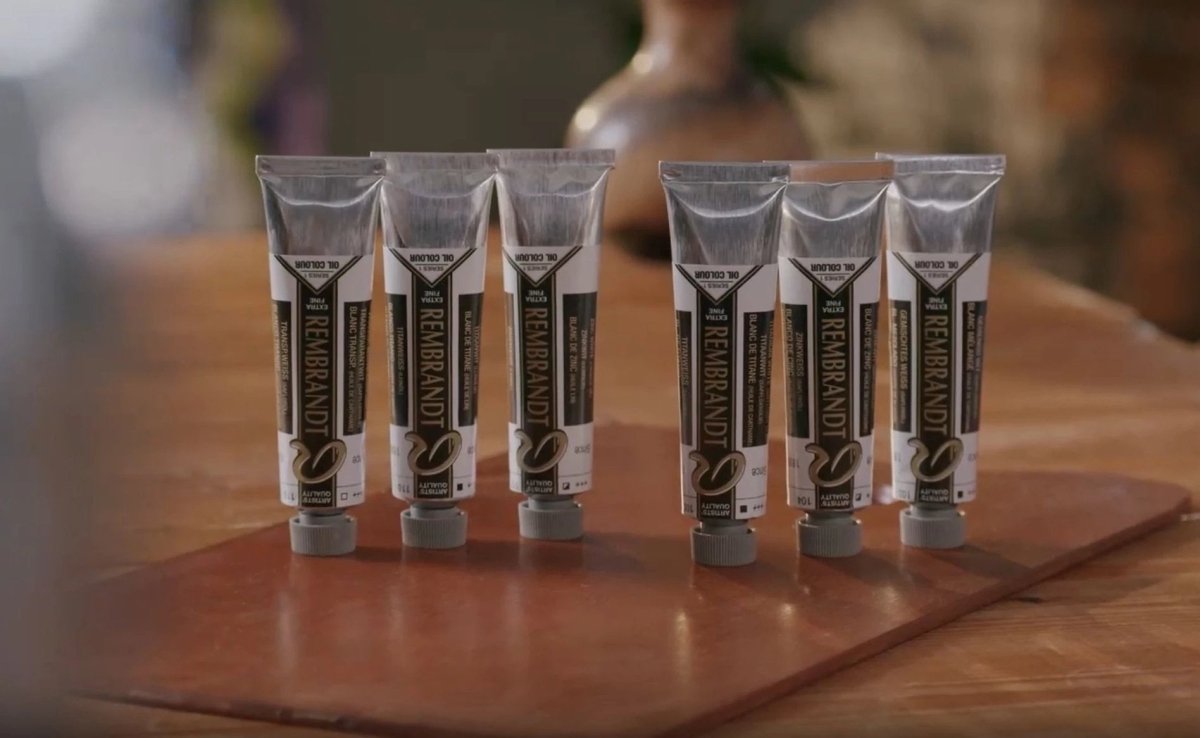
Our video demonstrates the whites in the Rembrandt oil paint collection. To showcase each shade’s properties, they were mixed with 281 Transparent Yellow Green.

The following shades were used in this video:

103 Mixed White

A neutral white. Contains both zinc and titanium pigments. Based on safflower oil.

104 Zinc White

A semi-opaque, cool white. Makes colours lighter without weakening the original colour. Based on safflower oil and best suited for the top layer of your painting.

105 Titanium White

An opaque, warm white. Great for toning down intense colours and creating opaque mixing shades. Based on safflower oil and best suited for the top layer of your painting.

117 Zinc White

A semi-opaque, cool white. Makes colours lighter without overpowering the original colour. Based on linseed oil and best suited for the lower layers of your painting.

118 Titanium White

An opaque, warm white. Great for toning down intense colours and creating opaque mixing shades. Based on linseed oil and best suited for the lower layers of your painting.

119 Transparent White

Lightens transparent colours, great for glazing techniques. Based on safflower oil.

817 Pearl White

The Rembrandt oil paint collection also includes a pearlescent white called Pearl White (817), a transparent white that adds an iridescent sheen to your work. This white is based on safflower oil and works best when applied in a thin layer on its own or mixed with transparent colours to create custom pearlescent shades.

Linseed vs. safflower oil

Besides the pigments used, the binder also impacts the paint's properties. As linseed oil shows some yellowing over time, it is sometimes replaced by safflower oil, particularly for white paint.

Safflower oil is less yellowing, which makes it perfect for use in the top layers of your painting. Whites based on safflower oil dry more slowly than whites based on linseed oil, however, so they are less suitable for thickly painted areas or lower paint layers. For the lower layers, we recommend using a white based on linseed oil, as these have a similar drying time to the rest of the oil colour range.

Rembrandt oil paint - white shades

Related blogs

The Old Masters’ palette and its relevance today - Royal Talens
Painting with oil paint

The Old Masters’ palette and its relevance today

Seventeenth century painters like Rembrandt, Vermeer and Hals are known for their dramatic light and rich colours. Their carefully chosen...
Exploring limited palettes and glazing techniques with Ale Casanova - Royal Talens
Painting with oil paint

Exploring limited palettes and glazing techniques with Ale Casanova

One of the greatest needs of painters is to keep putting themselves in situations that must be solved, challenges that...
The construction and finishing of an oil painting - Royal Talens
Painting with oil paint

The construction and finishing of an oil painting

Oil paint is the most complicated of all paints from a materials point of view when it comes to the...
Oil paint Colour-mixing - Royal Talens
Painting with oil paint

Oil paint Colour-mixing

Using Van Gogh oil paint in the three primary colours: 267 Azo Yellow Lemon, 366 Quinacridone Rose and 570 Phthalo...
Painting an ear - Royal Talens
Painting with oil paint

Painting an ear

Ears are ignored by so many artists but it's incredibly interesting to paint them! There are so many things going...
Painting a nose - Royal Talens
Painting with oil paint

Painting a nose

"Today we’ll paint a nose. I love noses! And I hope that I could share a piece of my love...
Painting a blue eye - Royal Talens
Painting with oil paint

Painting a blue eye

Inspiration can come from anywhere. For this eye, I was inspired by an incredible paint color - King’s Blue. I...
Landscape painting - Royal Talens
Painting with oil paint

Painting a landscape

In this step-by-step plan, Anouk Bijsterbosch shows us how to create an open-air landscape using Rembrandt oil paint. Also watch...