Cadmiums and alternatives - Royal Talens

Cadmium colours

Cadmium colours are known for their high opacity, lightfastness and tinting strength. These unique properties make them loved by many artists around the world and an incredibly useful addition to your colour palette.

Then why would they need alternatives? The properties of cadmiums are more extreme than those of other colours. If you want to mix with cadmiums, you only need a fraction of what you would normally use when mixing. Though this makes these paints quite economical in use, it also requires some knowledge and experience. Cadmiums are quite dominant in mixing, which can make them more difficult to use.

Permanent colours

Cadmium alternatives, often called permanent colours, are made to be equal to the cadmium shades in tone and brightness. These shades, however, are much easier to mix and tone down, as is demonstrated in this video. Permanent colours are semi-opaque, which allows them to show a little more of underlying colours or canvas, unlike the extremely opaque cadmiums.

Cadmium versus permanent colours

Whether you want to work with cadmiums or permanent colours depends on what you want to achieve in your painting. The video below shows a selection of cadmium colours compared to their permanent counterpart. All shades are shown by themselves and mixed with other colours to show their effects. Keep these examples in mind to help you select the right colours for your next painting.

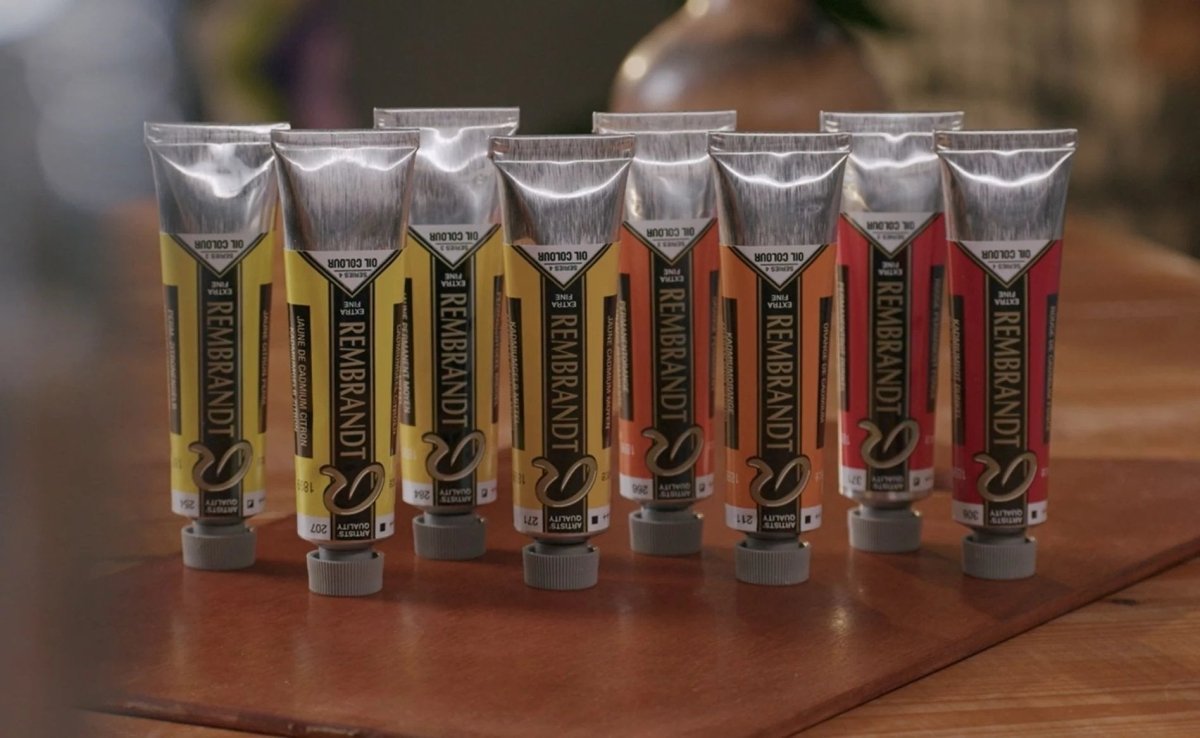
Assortment of Rembrandt Oil Paint

The following cadmium and permanent colours were used in this video:

  • 207 Cadmium Yellow Lemon
  • 254 Permanent Lemon Yellow
  • 271 Cadmium Yellow Medium
  • 284 Permanent Yellow Medium
  • 211 Cadmium Orange
  • 266 Permanent Orange
  • 306 Cadmium Red Deep
  • 371 Permanent Red Deep

To highlight the differences in mixes, all colours were mixed with an equal amount of 105 Titanium White and 517 King’s Blue.

Rembrandt oil paint - Cadmium colours and alternatives

Related blogs

The Old Masters’ palette and its relevance today - Royal Talens
Painting with oil paint

The Old Masters’ palette and its relevance today

Seventeenth century painters like Rembrandt, Vermeer and Hals are known for their dramatic light and rich colours. Their carefully chosen...
Exploring limited palettes and glazing techniques with Ale Casanova - Royal Talens
Painting with oil paint

Exploring limited palettes and glazing techniques with Ale Casanova

One of the greatest needs of painters is to keep putting themselves in situations that must be solved, challenges that...
The construction and finishing of an oil painting - Royal Talens
Painting with oil paint

The construction and finishing of an oil painting

Oil paint is the most complicated of all paints from a materials point of view when it comes to the...
Oil paint Colour-mixing - Royal Talens
Painting with oil paint

Oil paint Colour-mixing

Using Van Gogh oil paint in the three primary colours: 267 Azo Yellow Lemon, 366 Quinacridone Rose and 570 Phthalo...
Painting an ear - Royal Talens
Painting with oil paint

Painting an ear

Ears are ignored by so many artists but it's incredibly interesting to paint them! There are so many things going...
Painting a nose - Royal Talens
Painting with oil paint

Painting a nose

"Today we’ll paint a nose. I love noses! And I hope that I could share a piece of my love...
Painting a blue eye - Royal Talens
Painting with oil paint

Painting a blue eye

Inspiration can come from anywhere. For this eye, I was inspired by an incredible paint color - King’s Blue. I...
Landscape painting - Royal Talens
Painting with oil paint

Painting a landscape

In this step-by-step plan, Anouk Bijsterbosch shows us how to create an open-air landscape using Rembrandt oil paint. Also watch...