Priming a canvas for acrylic paint - Royal Talens

Before you start

  • Most store-bought canvasses come with a layer of gesso, so they’re universally prepared for various types of paint. These primed canvasses are a great surface to work on with acrylic paint.
  • A canvas that is specially prepared for oil paint is usually prepared using an oil-based primer. This results in an oily layer on top, which is unsuitable for acrylic paint.

Stretching your own canvas

If you’ve bought an unstretched canvas, make sure to properly stretch and attach the fabric to the frame before adding any primer. After that, you can apply acrylic binder and gesso.

Since canvasses are usually made from natural materials, the tension of your canvas can be influenced by the weather, humidity, temperature, manner of transportation and the way it’s packaged.

Primers you need

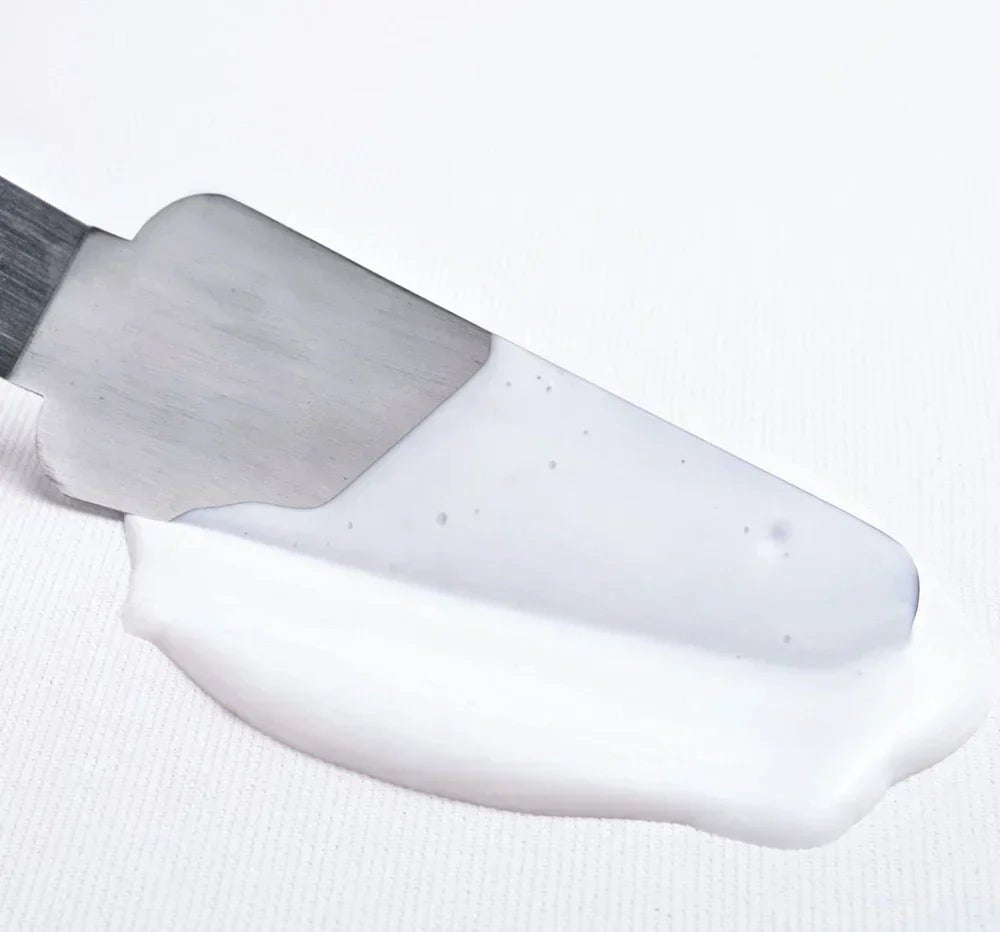
To prime your canvas, you need two things: an acrylic binder and gesso. Acrylic binder closes the structure of the canvas to prevent gesso and paint from seeping through. Gesso will provide you with an absorbent surface after drying, which makes it the perfect base for acrylic paint.

Discover our acrylic primers

Prime your canvas

Start by adding a thin layer of acrylic binder using a spalter brush. Once this layer has dried completely, you can add one to three thin layers of gesso. Gesso can be thinned using a small amount of water. To add color to your background, you can add a small amount of acrylic paint.

Remove any irregularities in your gesso layers by lightly sanding the surface once it has dried completely.

Add texture to your background

If you want to work on a more textured background, Amsterdam offers a great solution: modeling paste! With Amsterdam modeling paste, you can make relief backgrounds that are suitable to work on with acrylic paints. The modeling paste can be used by itself or in combination with Amsterdam acrylic colors. You can mix the colors with the modeling paste in any ratio. Do note, however, that the paste is pigmented with Titanium White, so your color will turn out lighter!

Related blogs

Paint Like the Ocean - Royal Talens
Painting with acrylics

Paint Like the Ocean

Discover how acrylic paint can capture the movement, depth, and atmosphere of water through colour, layering, and fluid techniques inspired...
Painting the Sound of Colour with Amsterdam Acrylics - Royal Talens
Painting with acrylics

Painting the Sound of Colour with Amsterdam Acrylics

What if a painting could feel like music? Not literally, but in the way it moves, repeats, and builds. That...
Sketch your world with Amsterdam Acrylics - Royal Talens
Painting with acrylics

Sketch your world with Amsterdam Acrylics

From quiet coffee moments to busy streets, sketching helps you see more. In this blog, Jeff Olson shares how to...
The architecture of intimacy: a bridge between acrylics and oils - Royal Talens
Painting with acrylics

The architecture of intimacy: a bridge between acrylics and oils

By Ale Casanova In Eclosion, Ale Casanova explores the dialogue between acrylics and oils on a large scale. By combining the...
Get started with acrylic paint - Royal Talens
Painting with acrylics

Get started with acrylic paint

You don’t need much to get started with acrylic paint. We have listed the most important supplies for you.
Layer, combine, experiment - Royal Talens
Painting with acrylics

Layer, combine, experiment

April is a call to disrupt routine. As light returns and energy shifts, it becomes easier to invite risk back...
Women in art working with acrylics - Royal Talens
Painting with acrylics

Women in art working with acrylics

Acrylic paint has been a transformative medium in modern art, giving artists the freedom to experiment and express themselves. For...
A gentler pace, a quieter palette - Royal Talens
Painting with acrylics

A gentler pace, a quieter palette

For February’s chapter in our yearlong celebration of Amsterdam Acrylics, written by Jeff Olson, we turn our attention to Soft...