Women in art working with acrylics - Royal Talens

Soak-Stain Innovation

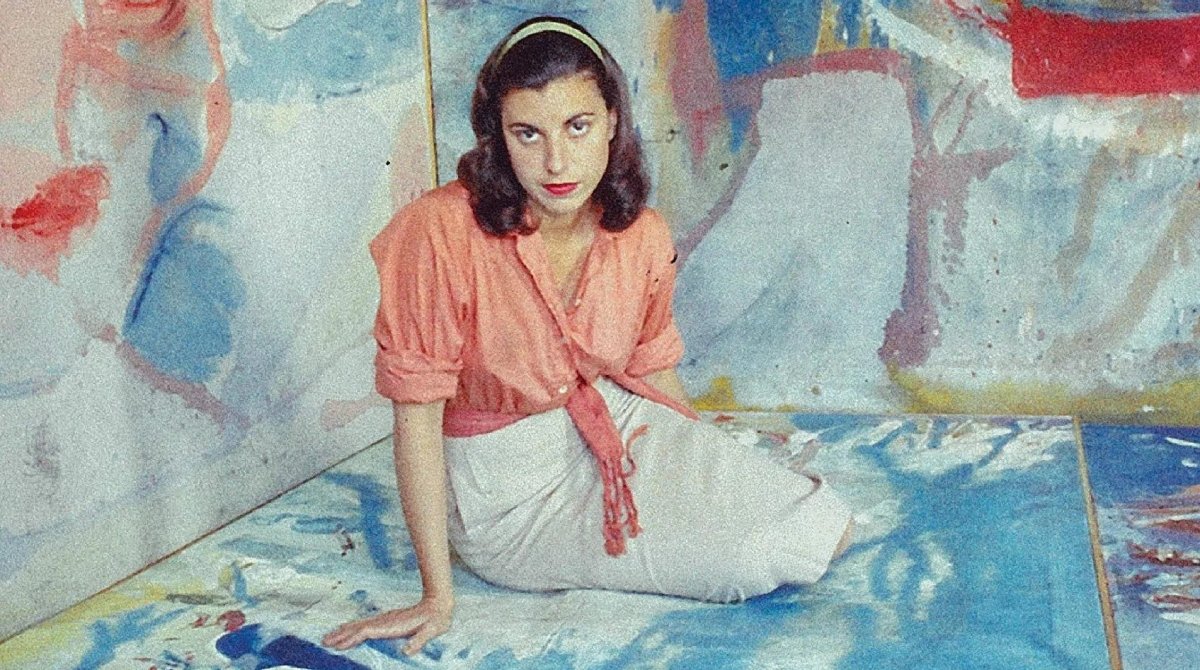
Helen Frankenthaler is known for her soak-stain technique, which reshaped postwar abstraction. Early in her career, she poured heavily thinned oil paint onto raw canvas, creating luminous washes of colour. In the 1960s, she embraced acrylic, a medium that allowed her colours to remain vibrant while giving her more control. With this shift, her work evolved, achieving a balance between fluidity and precision that became a hallmark of her style.

Precision and Perception

Bridget Riley used acrylic to explore the interplay of geometry and vision. Working on both canvas and architectural surfaces, she built compositions where colour, line, and repetition create optical movement. Acrylic gave her the consistency and clarity she needed to execute these complex patterns, producing work that is both rigorous and immersive.

Hyperrealism and Memory


In the realm of Photorealism, Audrey Flack turned to acrylic to capture detail, color, and light with remarkable fidelity. Large-scale still lifes such as Queen and Wheel of Fortune relied on the medium’s bright, durable pigments to explore memory, time, and reflection. Even after years focused on sculpture, Flack returned to acrylic, reaffirming its versatility and long-lasting vibrancy.

Contemporary Voices

Today, artists continue to expand acrylic’s expressive potential. Julie Mehretu layers mark-making, mapping, and architectural reference to create dense, dynamic compositions, while Katharina Grosse transforms entire spaces with sprayed acrylic, immersing viewers in colour. These contemporary approaches show that acrylic is not a single style but a responsive material, shaped by the artist’s vision and the scale of their work.

Continuing the Legacy

From the abstract experiments of Frankenthaler to the immersive installations of Grosse, women artists have demonstrated the versatility and expressive potential of acrylic. Their work shows how the medium can support both precision and experimentation, allowing ideas to take shape in rich and varied ways.

About the author

Jeff Olson is a Seattle based artist with more than thirty years of studio practice and exhibition experience. He is both a painter and an educator with a deep understanding of the materials that shape visual expression.

He is the Art Education Director for Royal Talens North America, where he shares his knowledge with universities, art organisations and professional events throughout the United States and Canada. His work focuses on the history, composition and expressive potential of artists materials. Find out more about Jeff on his website.